
The modern job hunt is starting to feel more and more like survival of the fittest in a high-stakes Hunger Games arena, where every application is a shot fired and the odds rarely seem in your favor. Layoffs have left thousands scrambling for new jobs and security, only to find the process more chaotic, predatory, and impersonal than ever.
Mark yourself “open to work” on LinkedIn, and you might receive a flood of recruiter messages – some of which are legitimate, whereas others come from convincing fake profiles fishing for your personal data. The line between opportunity and risk has all but vanished.
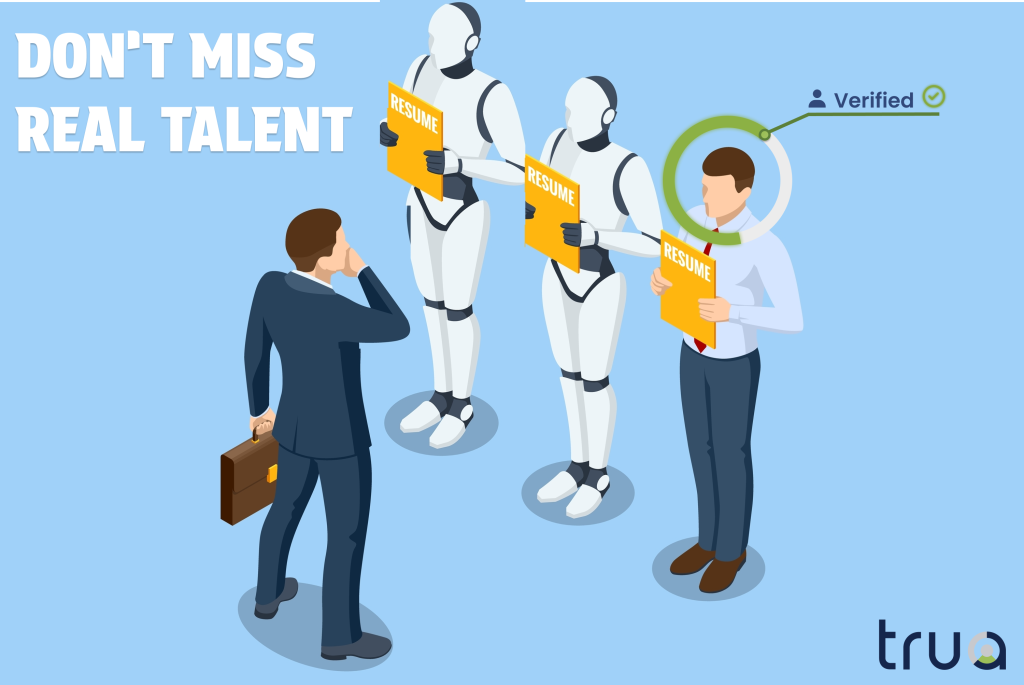
At the same time, the job market is buckling under a new pressure: an AI‑driven applicant tsunami. According to a New York Times report, LinkedIn saw a 45% surge in job applications over the past year; that’s roughly 11,000 submissions every minute. Employers are drowning in AI‑generated résumés, while real, qualified candidates struggle to stand out. One HR consultant in Utah posted a mid‑level tech opening and got over 1,200 applications within days. The HR consultant eventually pulling the post, because of too many fakes to sort through.
Between scams, impersonators, and bots, finding and filling a genuine job has started to feel like a competition in the dark. But what if hiring didn’t have to feel like The Hunger Games?
That’s where Trua steps in – rebuilding trust, identity, and fairness in an increasingly artificial process.
Rebuilding Trust in an AI Bot-Driven World
At its core, Trua is a digital identity and continuous background verification platform built to verify that every person in the hiring process is who they say they are – this is a real person, credentialed, and authentic.
Trua’s patented system empowers job seekers to now own their digital identity and background information, flipping the traditional employer‑driven model on its head. Instead of candidates sending sensitive personal data to countless employers or recruiters, these candidates complete their ID verification and background screening only once an inside Trua’s secure blockchain encrypted platform. Then they review their results, and choose exactly who can see them, by sending a private link to their records.
For employers, Trua introduces a Trust Layer that cuts through the noise of automated applicants by requiring a verified TruaScore during the applicant review process. It’s a process that takes only a few minutes, and companies can instantly distinguish real candidates from bots or fraudulent accounts.
Here’s how it works. And the result? A faster, safer, and more respectful hiring process for both sides.
- The company sends a Trua link to the candidate.
- The candidate verifies their digital ID, completes the background screen, and reviews their results.
- If there’s an issue with some areas of the individual’s background check, Trua’s team helps the candidate address or investigate it for accuracy before sharing results, saving time, and improving transparency.
- Once the background is verified, the candidate shares all the necessary records required by the employer, instantly and securely. The employer then verifies with Trua the candidate’s background without their PII, thus avoiding collecting, storing, and guarding such personal information. More importantly, the candidate can be onboarded right away. This saves time to hire by up to 70%, while dramatically reducing compliance costs, potential wrongful claims, and operational costs.
AI can’t fake a TruaScore. Every verification involves biometric, biographic, and document authentication techniques that bots simply can’t replicate.
Recruiters regain trust and confidence that each applicant represents a genuine human being, while job seekers get the recognition they deserve for their legitimate effort. The process reduces spam submissions, accelerates screening, and restores the human element missing in today’s digital hiring chaos.
What Makes Trua Different
Trua was built to tackle the four biggest challenges in hiring today: fraud, friction, data risk, and trust.
- The candidate leads the process (first-party model). The candidate, not the employer, conducts their own ID verification and background check. This puts ownership and privacy where it belongs, squarely with the individual, while keeping the process FCRA compliant and transparent.
- Always-on protection, not point-in-time screening. Background checks shouldn’t stop at hiring. Trua delivers continuous screening for a full year, alerting the employee and their employers to relevant updates and keeping workplace safety active, not reactive.
- Personal data stays protected. All personally identifiable information (PII) resides in Trua’s blockchain-encrypted vault, controlled by the individual. Employers no longer need to store sensitive PII data, reducing risk, liability, and exposure to cybersecurity threats. Note: A late 2025 IBM research report suggests that about 29 – 30% of companies can expect to experience a data breach within a two‑year period.
- Empowerment and transparency for candidates. Before sharing a background report, a candidate can review their results, resolve errors, or opt out if they know they won’t qualify. That saves both the candidate and employer unnecessary effort, time and cost.
With these guardrails in place, companies can cut time‑to‑hire, reduce FCRA compliance and operational costs, and onboard verified talent faster, while protecting candidates from scams and identity theft.
Why This Matters Now
The future of hiring depends on reclaiming trust. Automation can help speed workflows, but without human verification, it erodes trust and integrity instead of enhancing it.
Trua offers a human‑centric solution that complements with AI, not competes with it. By weaving transparency and validation into every job interaction, Trua ensures that both sides of the process feel safe, seen, and respected.
Simply put: Trua makes hiring human again simple.
Learn more at truame.com.